September 7, 2025
A FAMILY HISTORY BLOG BY LAVERNA COLSON SMITH
http://swedishrootsamericanbranches.com
Although Carl and Rebecca were far from rich, they lived a comfortable and stable life on beautiful Skrädeberg farm. Carl Samuel was a good farmer and manager and supplemented his income as a rural mail carrier, Rebecca, from her daughters’ accounts, was an excellent homemaker and mother. None of her children succumbed to childhood disease and /or fatal accidents. As each child left home, he or she received 300 Riksdaler and a cow when married or 300 when they left home to start out for themselves.
After Carl Samuel’s death on September 10,1859, an Estate Inventory was conducted shortly thereafter on September 17. The inventory set his assets at 6,519 Riksdaler and debts as 1,589. When the farm sold in 1866, the proceeds of 6,000 Riksdaler were divided equally between 12 children, each receiving 500. In today’s currency, that would be equivalent to 42,386 Riksdaler or $4,511 in US Dollars. It was a nice “nest egg” for the time. (The Riksdaler was replaced by the Swedish Krona in 1873 at par.)
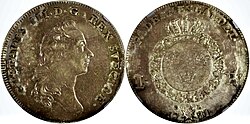
In 1873, the Scandinavian Monetary Union replaced the Riksdaler (from the German thaler) with a new currency – the Svenska Krona. To the left are 18th Century Riksdale coins displaying the Swedish King and royal seal.
At the time, “America Fever” was raging in Sweden. Between 1820 and 1920, 1,300,000 Swedes left their homeland for the “New Land.” For many, it was opportunity and adventure, for some religious freedom, for others simply survival. With the population explosion due to increased food production, arable land became scarce and rural poverty became the norm for many. Drought conditions persisted through the mid-19th century with the crop failures of 1867-1868 being particularly onerous.
All of Carl and Rebecca’s ten children left Sweden between 1852 and 1868. Carl ‘s first two children by Catrina Andersdotter, elected to stay. Here are their stories.
The Two Who Stayed
Johannes Carlsson (1808-1871)
Johannes, the first child and son born to Carl Samuel Larsson and his first wife, Catrina Andersdotter, was born on August 18, 1808. He lost his mother at five years of age but was fortunate to soon have a kindly and capable stepmother, Rebecca Samuelsdotter. Johannes married Sara Lena Svensdotter (1813-1886) of Sunneryd Farm in Ödeshög Parish on January 6, 1835 at age 27. Sara Lena was the daughter of Sven Jaensson and Maja Larsdotter who had farmed a 3/16 mantal property at Sunneryd all their lives. After the young couple’s marriage, Johannes became the farmer while Sven and Maja remained on Sunneryd with Undantag rights. At some point, Johannes purchased the farm as a freehold.
Sunneryd is just to the south of Skrädeberg and overlooks Lake Vättern. Johannes and Sara Lena’s first child, Carl Johan Johansson was born June 26, 1836, a year and half before Carl Samuel and Rebecca’s last child, August. Despite a promising start, the couple struggled. Their second child, a daughter, Christina Charlotta was born on April 1, 1838 but lived only 10 days. Their third child, Gustaf Alfred was born on October 8, 1840 but died nearly two years later on July 12, 1842 of Dysentery Their last two children, Gustaf, born July 7, 1844 and Lars Otto, born September 16, 1853 both survived to adulthood, as did their firstborn, Carl Johan. (Since the paternal naming system was still in place in rural Sweden, the new family name became Johansson.)
Johannes died on April 22, 1871 at 62 of an infection in the foot, possibly a farm accident. Carl Johan had already left home at this time, having purchased a farm in Kråkeryd, just north of Skrädeberg. Gustaf took over the farm management at Sunneryd but left for Västra Tollstad in 1880 and Lars Otto left for North America the same year. Sadly, Sara Lena remained on her birth farm, Sunneryd, under her Undantag rights, and died of “the chills” on July 7, 1886. By this time, she had been declared a “pauper.”
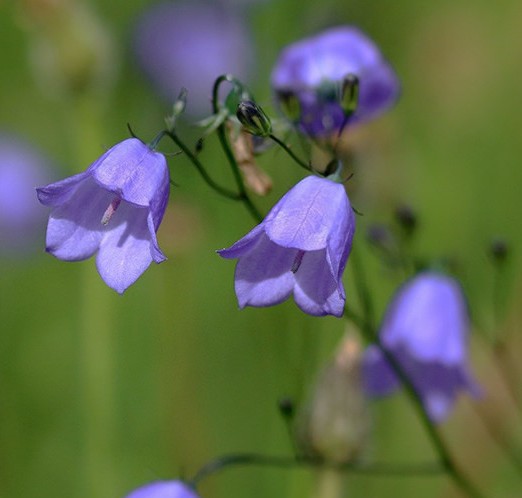
Swedish Blaklaka (Blue bells) – The Swedish National Flower
In 1909, my great Aunt Ida visited Johannes’ grandson in Kråkeryd. In Colson Family Records, she recalled picking beautiful blue bells along Lake Vättern as well as strawberries, daisies and wild roses I visited Kråkeryd Preserve in 2010 – not knowing, at the time, it was the home of an ancestor.
Johanna Carlsdotter (1810-1884)
Johanna Carlsdotter was the first daughter born to Carl Samuel Carlsson and his first wife Catrina Andersdotter. Johanna married Petter Jonsson, a farm hand from Kråkeryd when she was 20 years old and he was 30. They set up their home on Jusseryd Farm and became parents of Carl Johan (same name as her brother’s first son) on April 3, 1831.
In their later years, Johanna and Petter lived with their son, Carl Johan Petersson, and his wife and daughter. Carl Johan was a torpare in the Lila Lund farming community in Västra Tollstad Parish, north of Ödeshög. Johanna died on June 10, 1884 at age 74. No cause of death was noted in the church book.
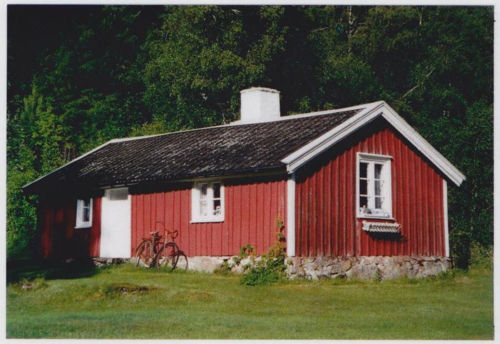
Net Blog: THOSE WHO LEFT: THE TEN AND THEIR JOURNEY TO AMERICA
BLOG ARCHIVE FOR ALL POSTS WRITTEN AND PUBLISHED FOR COLSON FAMILY HISTORYAND GENEALOGY
Swedish Pronunciation Guide for English Speakers
The Swedish Language has 3 extra vowels and some challenging consonant combinations. Here is a quick guide to pronouncing these vowels and tricky consonants
Åå Sounds like the “o” in for
Ää Sounds like the “ai” in fair
Öö Sounds like the “ea” in earn
Y Sounds like the Y at the end of Terry
SJ,sj Pronounced like “wh” – a voiceless fricative.
K, k Pronounced like “sh” before the soft vowels of: e, i y, ä or ö

 COLSON FAMILY GENEALOGY AND HISTORY
Leave a comment