“They were born in Ödeshög and the ten came to America.”
A FAMILY HISTORY BLOG BY LAVERNA COLSON SMITH
Swedishrootsamericanbranches.com

LaVerna Colson Smith
Crossing the Missouri River – February, 1867
Victor Colson and his party left Sloan, Iowa in February of 1867. According to family records, they waited until the Missouri River was sufficiently iced over to attempt the crossing. Since weather was not recorded in Nebraska until the 1890’s, I cannot verify the temperature and condition of Burt County weather in February of 1867 although most current sources indicate that Nebraska weather has warmed an average of 1.6 degrees since 1890. Today, the average February temperature in Burt County is 24 degres Fahrenheit. In 1867 it was no doubt much colder for the Missouri River to solidly ice over. Currently the river does not solidly freeze but forms ice blocks and jams and often floods. In my memory, it has always been an angry river.
Victor and his party crossed the Missouri over ice between Onawa, Iowa and Decatur, Nebraska, as indicated on the map below. At the time, Decatur was a small village developed around an Indian trading post. The town was named for Stephen Decatur, a former school teacher, who had abandoned his wife and children in New Jersey after traveling west in 1841 and establing a farm in the area called Decatur Springs.
Since there were no roads to speak of at that time, the settlers used long established Indian trails in northeastern Nebraska. In fact, Highway 77, which runs north and south in eastern Nebraska was a well established Sioux trail that ran along the edge of Victor’s claim. The party may have chosen to travel in winter when the ground was frozen rather than a sea of mud.
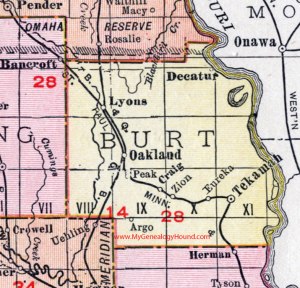
. Victor Colson and his party crossed the Missouri River bewteen Onawa, Iowa and Decatur, Nebraska in February, 1867. They then made their way to north of Oakland, not yet a town. Tekamah had been, however, established as the county seat
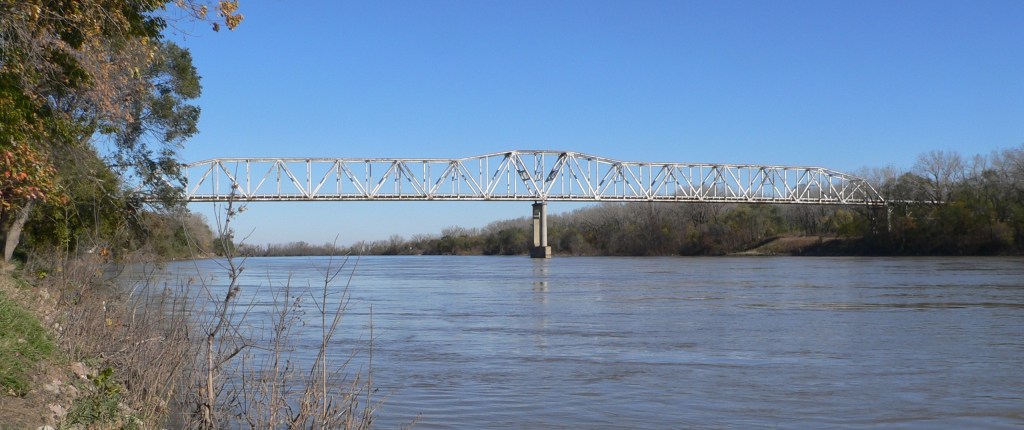
The Dugout
A dugout fashioned into the side of a hill on John Anderson’s claim, would become their first home in this raw and isolated Nebraska Territory. The dugout had been prepared the prior year before the ground froze and provided temporary quarters until Spring when the men constructed sodhouses on their claims. It is difficult to imagine a more challenging environment especially considering the space was shared by three men, a woman, a toddler and a four month old baby.
In his memoirs, L. E. Colson , the toddler mentioned above, recalled that “after we came over, for six weeks, it blowed and snowed incessantly and we had to use scoop shovels to dig ourselves out in the morning.”
The Sodhouse
Again, quoting from L. E. Colson’s memoirs, “Father built a slab house in the Spring and battened it with slabs so one round side was out and one round side was in. I was just as happy there as ever could have been in a mansion and everyone was happy.”
The family lived in the “soddie” for seven years until Victor built a 14 X 24 frame house which became a wing of their first real house. Victor made all their furniture and was quite skilled even making cupboards.
Victor’s son, Elmer Colson, who later took over the farm, erected miniature monuments to commemorate the first house and well on the original Colson homestead. After the property was sold out of the family, the new owners scraped off all the buildings and landscaping but sponsored a historical marker which is located on the site of the homestead and just off Highway 77 north of Oakland, Nebraska.
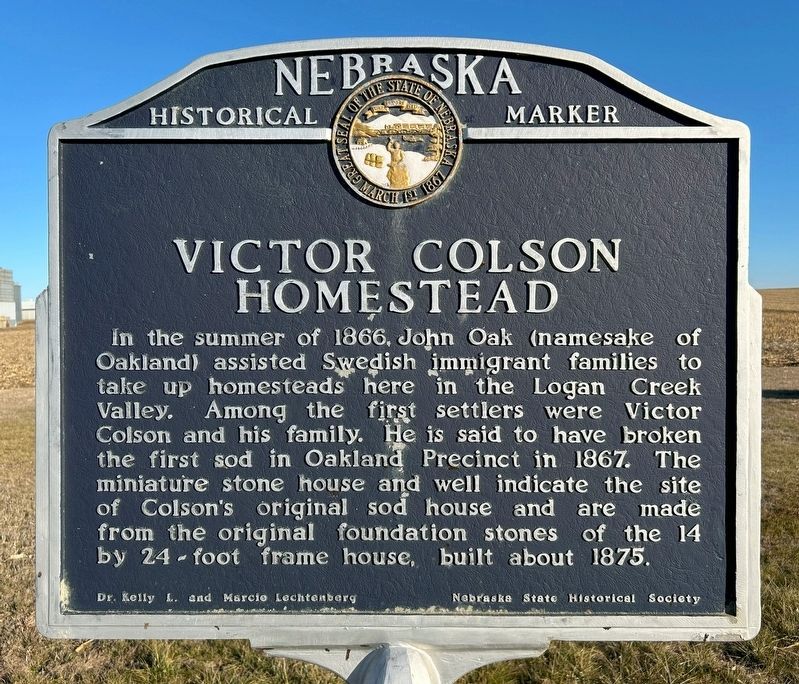
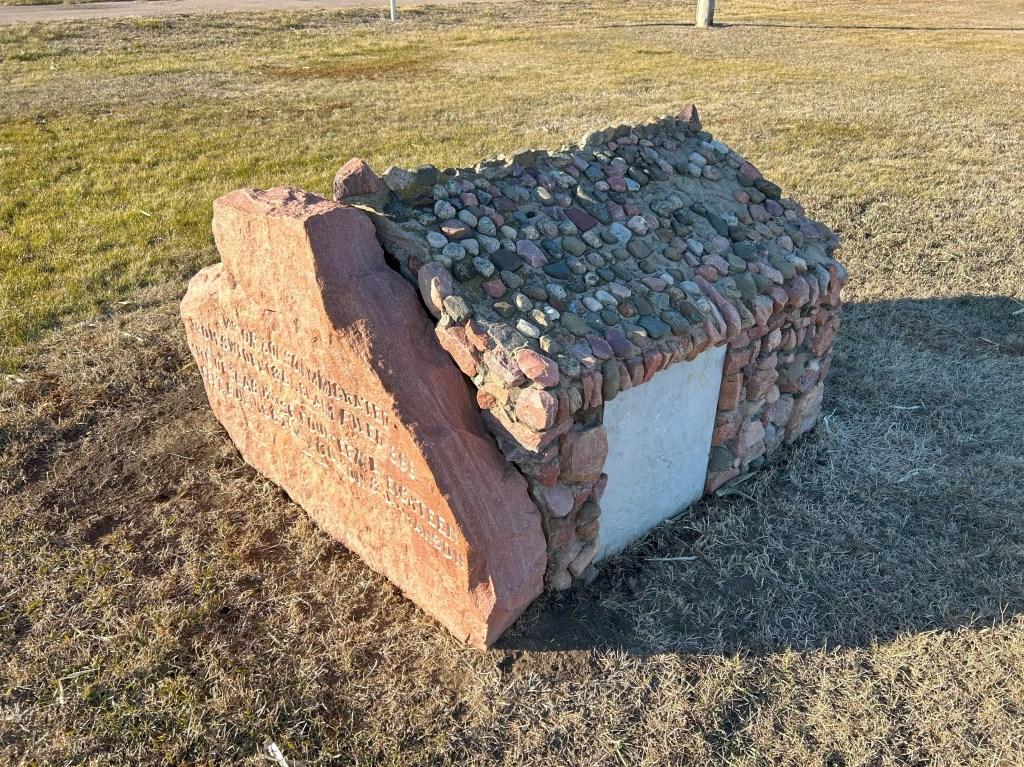
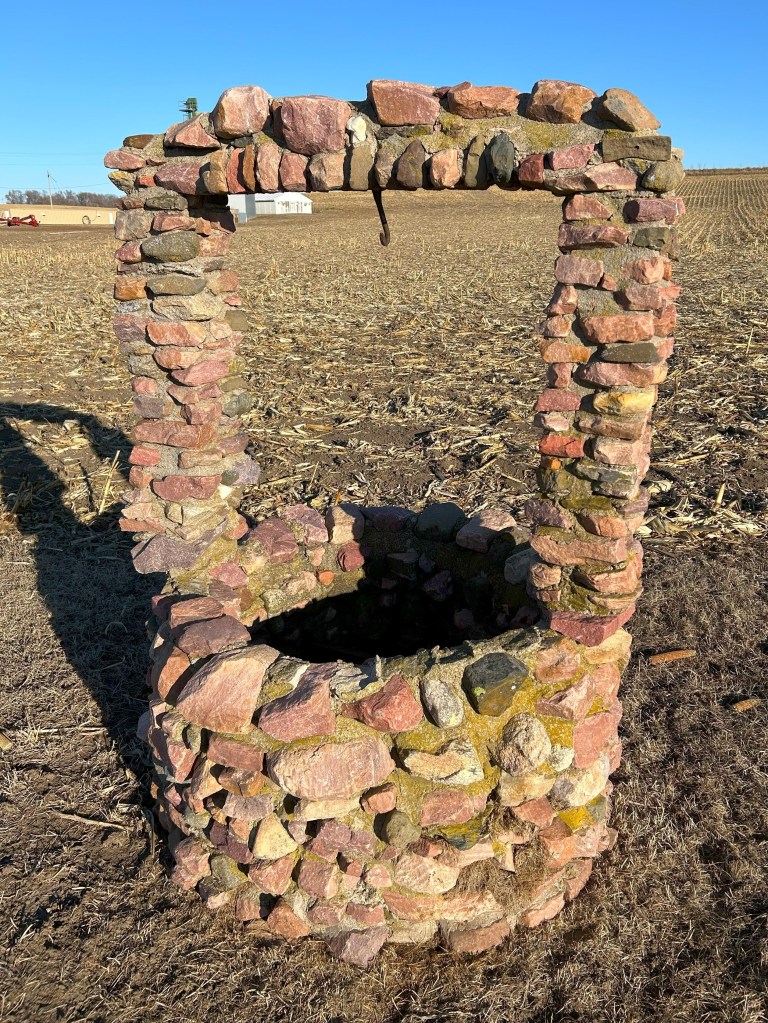
Source: Nebraska State Historical Society (Marker #455); Erected by Dr. Kelly L. and Marcie Lechtenberg
Author’s Note: At the time these photos were taken, the old bucet had either been removed or stolen. I was able to see it there on my visit there in 2018.
Next Post: BLOOD, SWEAT AND TEARS – NEBRASKA HOMESTEADING- 1867 – 1875
BLOG ARCHIVE FOR ALL POSTS WRITTEN AND PUBLISHED FOR COLSON FAMILY HISTORYAND GENEALOGY

 COLSON FAMILY GENEALOGY AND HISTORY
Leave a comment