
“They were born in Ödeshög and the ten came to America.”
A FAMILY HISTORY BLOG BY LAVERNA COLSON SMITH
Swedishrootsamericanbranches.com

LaVerna Colson Smith
VICTOR COLSON AND HANNAH HANSON…THEIR STORY CONTINUES
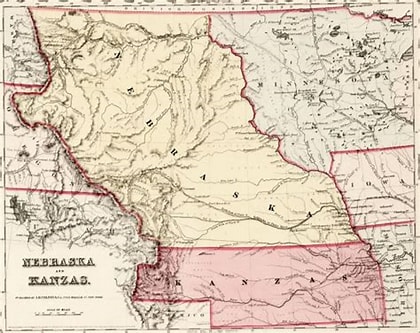
Victor and Hannah arrived in Nebraska just prior to Statehood. In fact Nebraska was declared a state on March 1, 1867 by President Andrew Johnson. Nebraska was carved out of the Nebraska-Kansas Territory that had been established in 1854 with popular sovereignty, meaning residents had the option to allow who could vote in elections. By 1867, the Civil War had been decided and elections were open to both white and black citizens. Nebraska was the first state admitted to the Union after the end of the Civil War.
Breaking the Sod
Early homesteaders used iron plows to turn over the tough prarie soil with layers of grass and roots. It took enormous stgrengh and skill and was literally back breaking work. According to family records, Victor broke 20 acres of sod in the first year of his homestead ing (1867) as well as broke sod for others at $5 an acre. Of those 20 acres, 10 acres were planted with sod corn, with Hannah doing the planting.

There are many varieties of these plows and Victor may have used one that could be connected to horses. The above plow was pictured prior to being auctioned at a farm sale.
Isolation and Long Distances
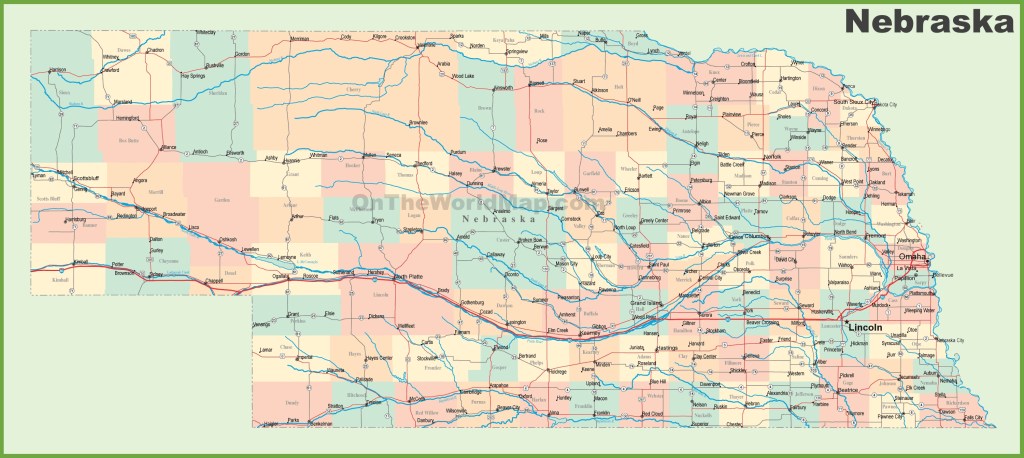
As I review the early records of this time, I am amazed at how quickly these homesteaders built a sustainable life despite numerous and hard challenges. They had to travel long distances to markets. It was a day’s trip from Victor’s homestead to Decatur for basic supplies and lumber. It was a six day trip to Omaha to sell produce and crops. There were few established roads. Sudden snow storms and wind caused delays and required sheltering in place. Hannah and her small children were often left alone for days. This was particularly significant because their homestead bordered a Sioux trail and many times she was approached for food or shelter. She never turned anyone down and maintained friendly relations with the Sioux.
These homesteaders or pioneers were particularly skilled at survival. They knew sophisticated farming techniques and animal husbandry. They were proficient at cooking, food preservation and conservation. They practiced personal discipline and brought with them high moral standards and virtures. According to L. E. Colson, Victor and Hannah’s first born son, every morning started with prayer and praise and the evenings ended the same way.
The Grasshopper Years – 1870’s
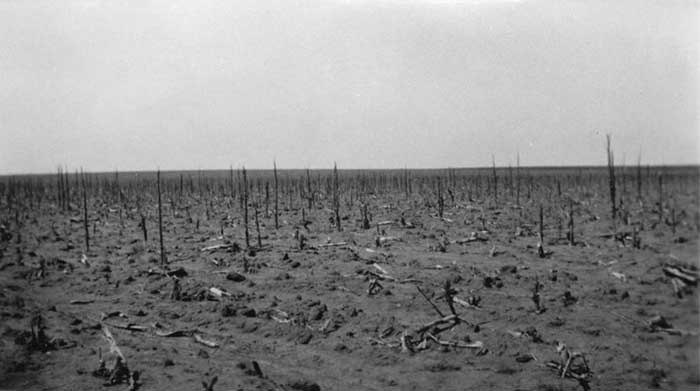
The early settlers fought grasshopper infestation for years but 1874 was a particularly devasting year when billions to trillions of grasshoppers emerged in great clouds from the Rocky Mountains to descend on the Great Plains eating anything in sight including the wool off sheep and the harnesses off horses. Crops were destroyed and many farmers suffered complete financial ruin. There is no record of how Victor and Hannah Colson fared during those devastating years but they must have struggled through this disaster as well.
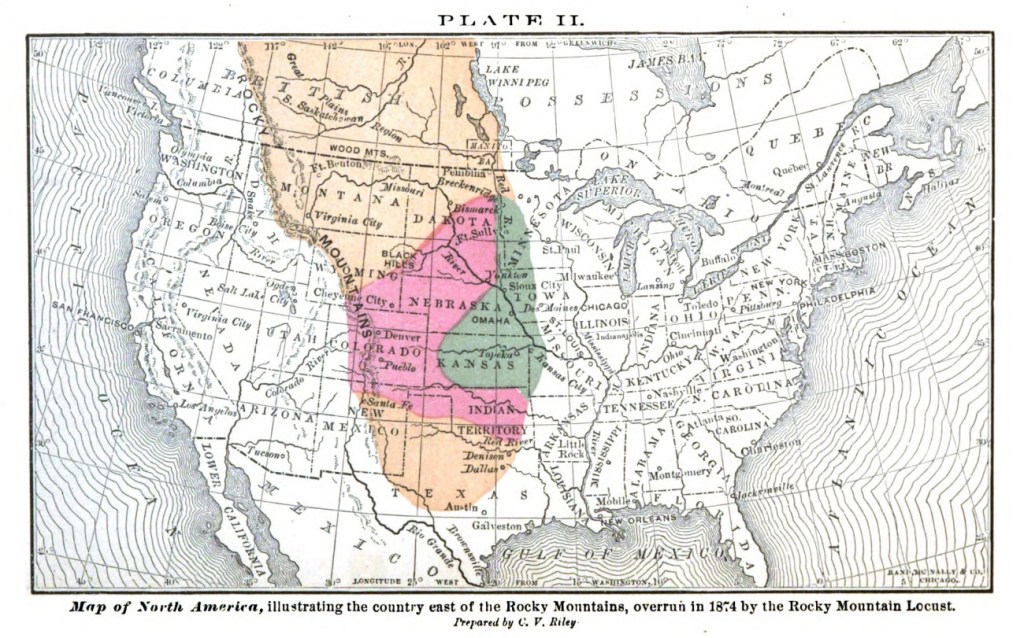
The above illustration shows the enormous area in the Great Plains affected by the locust plague of 1874. The area was also suffering through heat and drought at the same time.
Like the dust bowl in the following century, both the state and the federal governments provided assistance including, food, clothing, seeds and financial aid. In fact, it was the first instance of “disaster relief” in our national history and set the precedent for agriculture’s continuing relationship and often dependence on the federal government.
(Charles Valentine Riley) The plague abated in the following year due to a particularly hard freeze in the early spring, killing off most the eggs.

Of the millions of homesteaders who registered claims only 40% of them successfully patented their claim and obtained legal title to their land.
.
Next Blog: Community on the Prarie – The Early Years
BLOG ARCHIVE FOR ALL POSTS WRITTEN AND PUBLISHED FOR COLSON FAMILY HISTORYAND GENEALOGY

 COLSON FAMILY GENEALOGY AND HISTORY
Leave a comment